



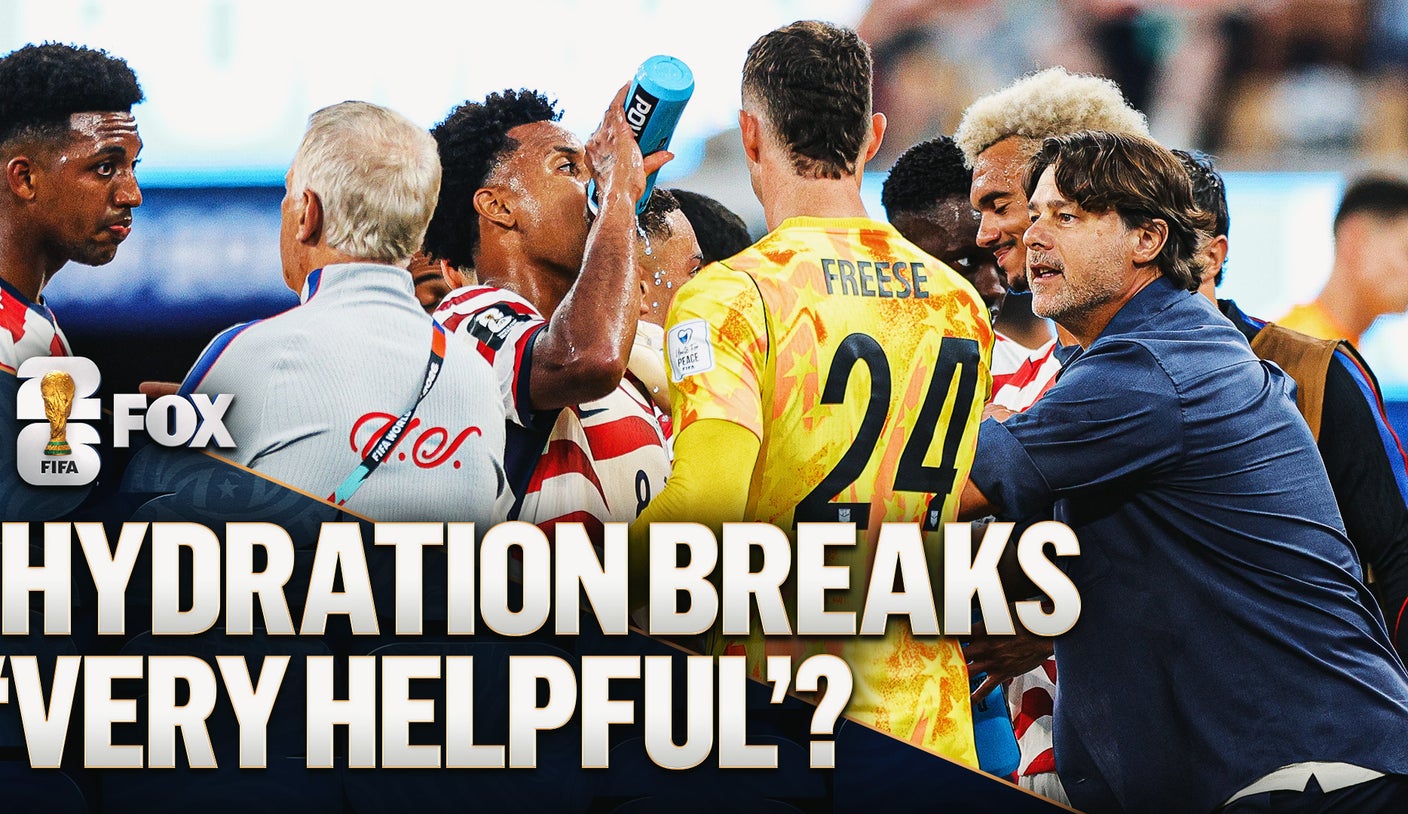

U.S. World Cup Training Base (Irvine, Calif.) — One of the biggest story lines entering — and now during — the 2026 FIFA World Cup has been the added wrinkle of mandatory hydration breaks.
Rather than playing two uninterrupted 45-minute halves, FIFA has introduced a brief three-minute cooling period midway through each half, effectively dividing matches into quarters. The measure is intended to protect players from extreme summer heat, with temperatures in some host cities expected to exceed 100 degrees Fahrenheit. Many World Cup sites, however, are equipped with roofs and climate-control features designed to help mitigate those conditions.
The topic has generated debate for months. Some players and coaches agree that water breaks aren’t needed in enclosed stadiums where conditions are more manageable, but they acknowledge it’s a different story in open-air venues.
The U.S. men’s national team won its first two World Cup matches — against Paraguay and Australia — and has already clinched first place in Group D. The Americans face Türkiye on Thursday in Los Angeles, but the result doesn’t matter because they are already booked to play in the round of 32 on July 1 in Santa Clara, California.
(Photo by Jane Gershovich/ISI Photos/ISI Photos via Getty Images)
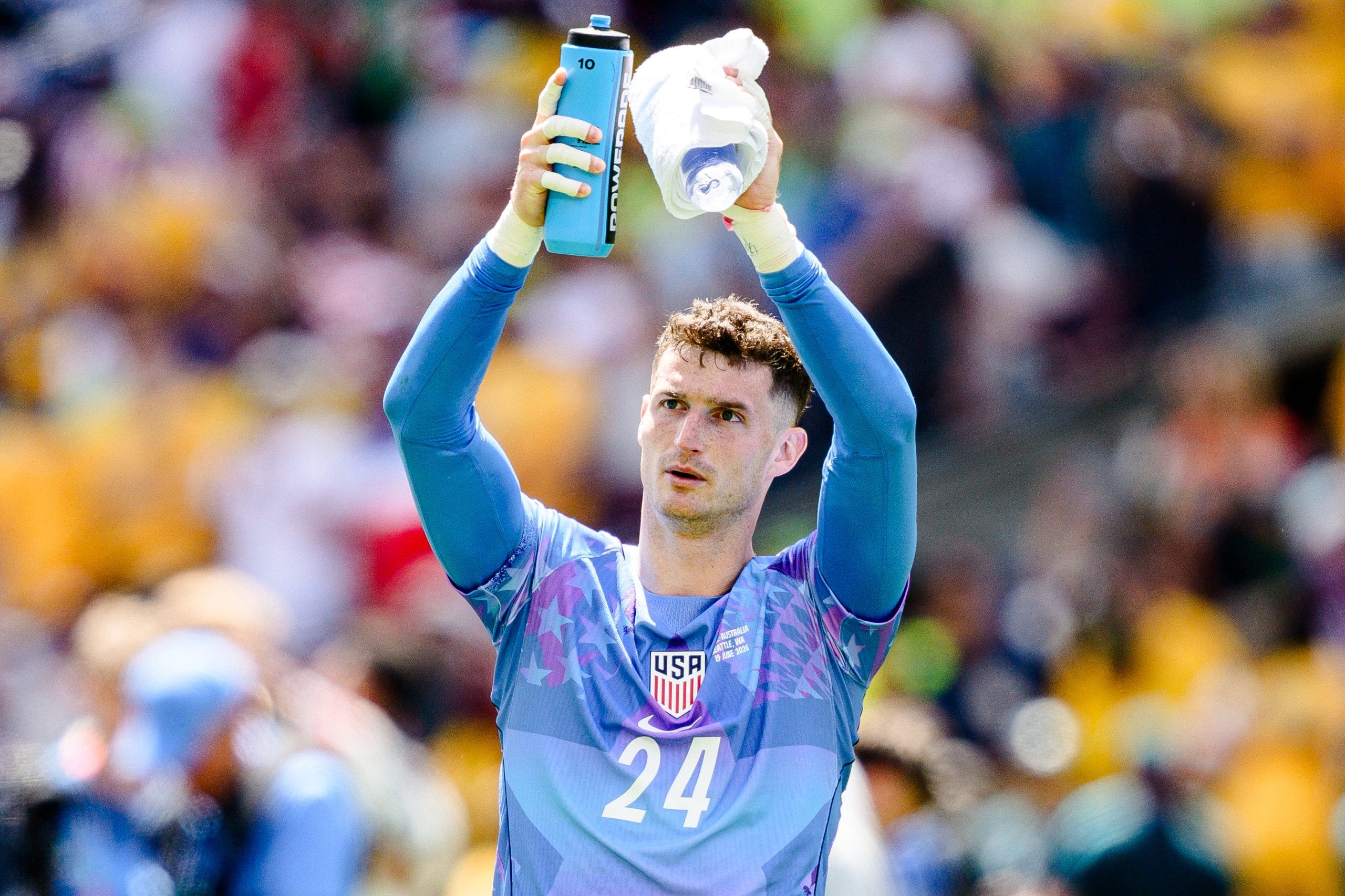
The USA’s first match at Los Angeles Stadium was mostly enclosed with an evening kickoff time, while Seattle Stadium was open for the midday game. Even so, the players are pretty unfazed by the addition of water breaks.
“I’m pretty indifferent towards it,” starting goalkeeper Matt Freese told reporters on Tuesday. “I’ve done it before in MLS, so it’s not too new for me.”
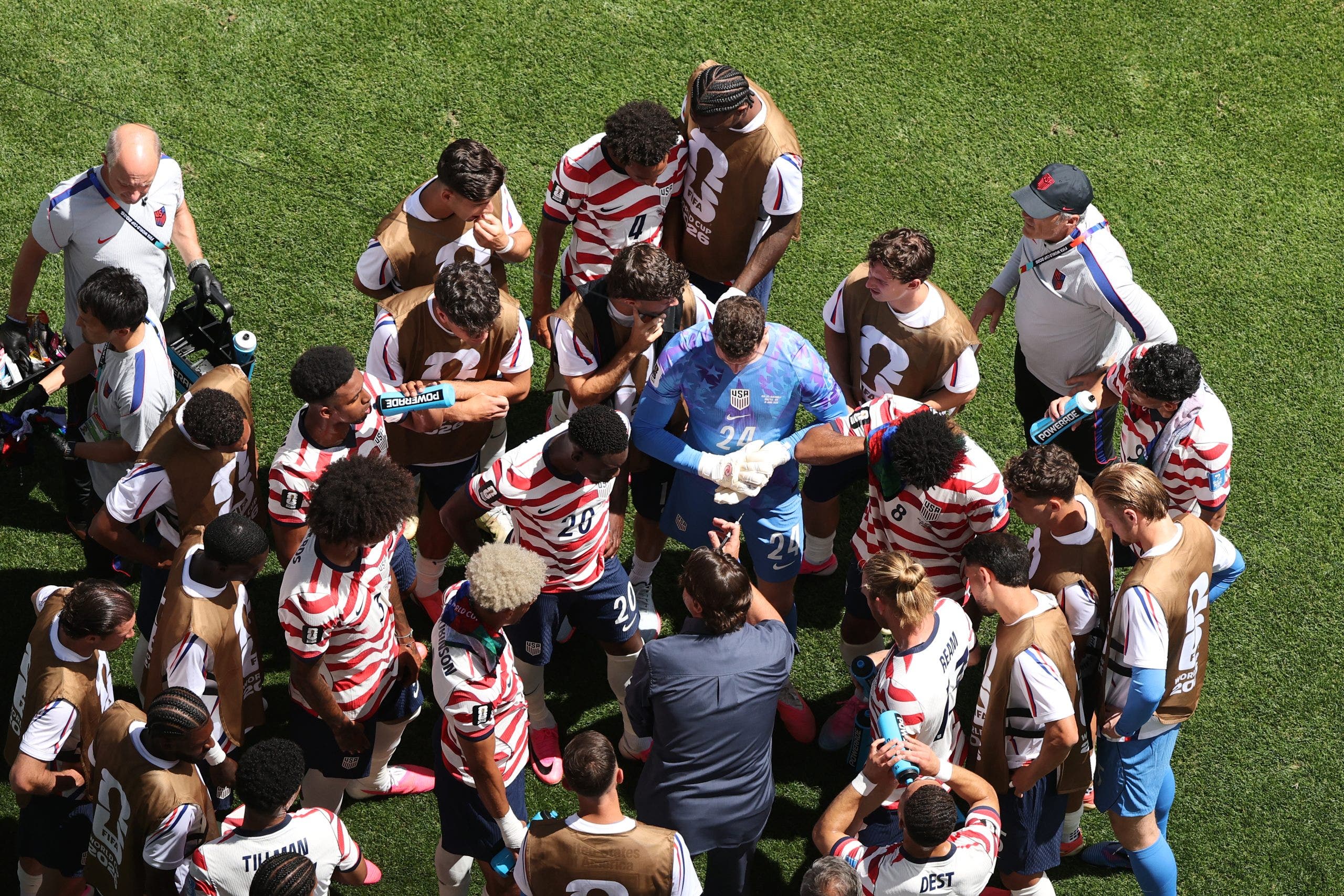
The hoopla surrounding the breaks intensified during the USA’s pre-World Cup tune-ups. When the squad played Senegal in Charlotte a few weeks ago, manager Mauricio Pochettino pulled out a laptop during the hydration break to review tactics, using the time to his advantage. The broadcast hilariously captured the moment as players huddled around Pochettino, listening while he outlined adjustments and tweaks.
“I think it’s very helpful for the players to see actions,” Pochettino said after that match. “It’s not only to tell what you want [them] to enhance, or what they should do. Once they see the picture, it’s actually necessary now.”
Pochettino acknowledged then that it was “uncommon” to have a useful prop akin to a laptop computer at his disposal in the course of a sport, however then claimed he was the primary coach to do it whereas managing Espanyol from 2009-12.
Pochettino has continued to make use of the laptop computer throughout the World Cup.
“Yeah, typically [the coaches] simply change the ways or no matter in the event that they see issues are usually not going effectively in our manner,” Sergino Dest informed reporters final week forward of the Australia match. “I believe it’s good to have a hydration break. It’s additionally [a chance] to type of settle and speak together with your teammates. It may be good.”
(Photograph by Alex Grimm/Getty Photographs)
Pochettino stated in March that he was not a fan as a result of it disrupts the rhythm of the sport. He stated he was “irritated” by the rule, however accepted it.
Soccer purists agree.
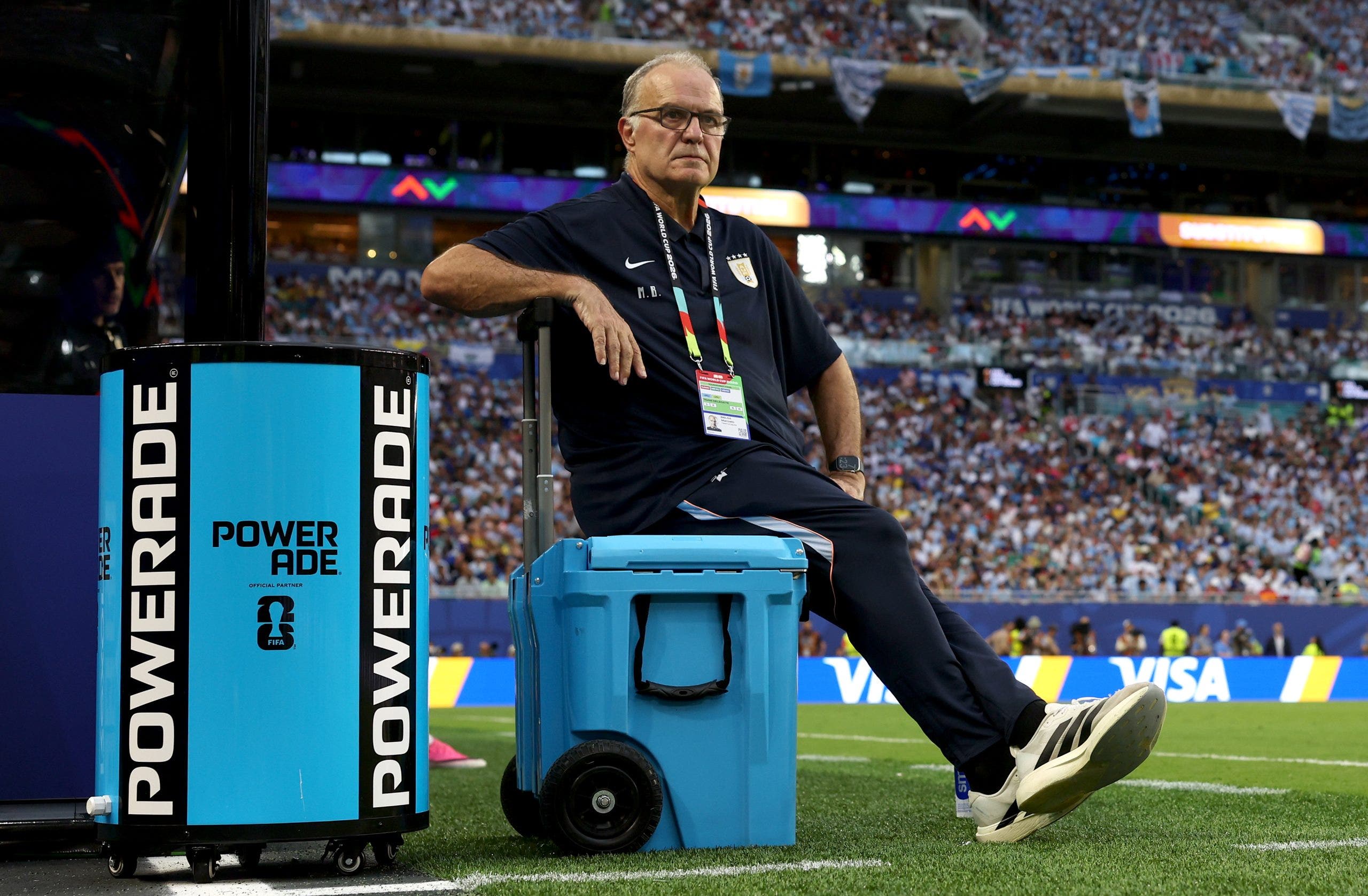
Uruguay supervisor Marcelo Bielsa — who’s Pochettino’s mentor and coached him on the Argentina nationwide group – was requested about it forward of his facet’s 2-2 draw with Cape Verde earlier this week.
“With the brand new guidelines there are many targets, so be it,” Bielsa stated at a press convention. “In keeping with the overall consensus, enjoying 4 intervals as a substitute of two alters the culturally constructed conception of tips on how to interpret soccer.
“In my opinion, it provides nothing and takes away lots. When [the match] was divided into 4 intervals, no thought was given to the impact it might need on what makes soccer such a fascinating sport, however as a substitute to different repercussions which I’m neither discussing nor analyzing.”
(Photograph by Michael Regan – FIFA/FIFA by way of Getty Photographs)
Different managers have voiced criticisms as effectively. However no matter any backlash, water breaks in worldwide soccer could possibly be right here to remain. FIFA president Gianni Infantino stated Tuesday that they are going to determine what to do in future tournaments “based mostly on this expertise.”
“Possibly the coach can reassess sure conditions, right sure errors,” Infantino informed SNTV. “The gamers get slightly relaxation and are available again in full velocity. Effectively, is that unhealthy, essentially? Possibly it’s good. And we see as effectively the depth of the video games. We’ve by no means seen 90 minutes in a match like this performed in such an depth.
“Till the final second of the match, gamers assault and so forth. And perhaps — perhaps not — however perhaps it’s additionally a bit due to this little break the gamers have, and after they’ll return on the sphere and present what they’ll do.”
This dialog will doubtless proceed even after the World Cup remaining. However so far as U.S. gamers are involved, it’s no huge deal.
